
Pesto is one of the most famous and versatile sauces in the world. Known for its rich aroma, bright green color, and smooth texture, basil pesto is used in pasta, sandwiches, salads, pesto recipe chicken, seafood, vegetables, and even as a dip. While store-bought pesto is easy to find, it often contains preservatives, dull flavors, and less fresh ingredients. Making pesto at home gives you pure, bold flavor and total control over the quality of every ingredient. Homemade Basil Pesto Recipe – Fresh, Flavorful, and Easy.
At a certain point, it became clear that comfort and convenience were leading people to buy items like pesto from stores, a trend which, in pesto recipe mass-produced foods, can often be negative nutrition-wise. In order to improve on purchased pesto, we suggest homemade pesto. With homemade pesto, you can choose fresh basil, good-quality olive oil, real Parmesan cheese and avoid unnecessary preservatives or extra salt.
Try to put it together yourself. pesto recipe Homemade pesto is something very easy to make with standard ingredients. Every step is clearly explained in this detailed guide so even beginners can follow along and get it right the first time. Whether you enjoy pesto in pasta, on bread, in salads, or as a topping for grilled food, this recipe gives you everything you need to create authentic, fragrant, and fresh basil pesto.
What Is Pesto and Why Make It at Home?
Pesto is a traditional Italian sauce made from fresh basil leaves, garlic, nuts, Parmesan cheese, olive oil, and salt. It is blended until creamy and spreadable. The name “pesto” comes from the Italian word pestare, which means “to crush.” Traditionally, it was made using a mortar and pestle, but modern home kitchens usually prepare it in a food processor.
Store-bought pesto can often contain:
- Too much oil
- Artificial flavoring
- Preservatives
- Lower-quality cheese
- Dull color
- Excessive salt
Homemade pesto, on the other hand, gives you:
- Fresh aroma
- Bright green color
- Clean, simple ingredients
- Better taste
- Better texture
- Customization according to your preferences
With homemade pesto, you bring out the true flavors of basil and create a sauce that tastes vibrant, lively, and incredibly delicious.
Ingredients Needed for Homemade Basil Pesto
Homemade pesto requires only a handful of ingredients, most of which are easily available. They combine beautifully to create one of the richest, most flavorful sauces.

List of Ingredients:
- 2 cups packed fresh basil leaves
- ⅓ cup pine nuts (or walnuts, cashews, or almonds)
- 2–3 garlic cloves
- ½ cup grated Parmesan cheese
- ½ cup extra virgin olive oil
- ½ teaspoon salt
- ¼ teaspoon black pepper
- 1–2 teaspoons lemon juice (optional but recommended for color + flavor)
You can adjust ingredients depending on taste, diet, or availability.
Tools of Trade
No special kitchen equipment is needed. Basic tools do the job perfectly.
- One food processor or blender
- One small pan for toasting nuts
- One spoon or spatula
- One clean jar for storing
- One towel for drying basil
- A bowl of cool water for washing
Simple tools, simple process — perfect for home cooking.
Step-by-Step Guide to Making Perfect Basil Pesto (Highly Detailed)
Step 1: Prepare and Clean the Basil Properly
Start by selecting fresh, green basil leaves. Remove any stems or wilted pieces. Fill a bowl with cool water and place the basil leaves inside. Gently swirl the leaves with your hands so that dust and impurities fall to the bottom.
Lift the basil leaves out of the water and place them on a clean towel. Pat them completely dry. Moisture affects texture and color, so dry leaves give you better pesto.
Step 2: Toast the Nuts Gently
Place a small pan on medium-low heat and add your nuts. Toast them for 2–3 minutes, stirring constantly. Toasting brings out a deeper flavor and adds warmth to your pesto. Once lightly golden and fragrant, remove them from the pan immediately.
Step 3: Add Basil, Garlic, and Nuts to the Processor
Place all the basil leaves into your food processor. Add the toasted nuts and garlic cloves. Pulse 6–8 times. Pulsing instead of continuous blending helps control the texture and keeps the basil from turning dark too quickly.
Step 4: Add Parmesan Cheese
Add the grated Parmesan cheese and pulse again. The mixture will start to come together and become more uniform. Cheese adds richness, saltiness, and a creamy texture.
Step 5: Slowly Drizzle in Olive Oil
Turn the processor on low speed. Very slowly drizzle in the olive oil through the top opening. Pouring slowly helps emulsify the pesto, making it smooth and creamy.
Add the oil gradually until the desired texture is reached—thicker for a spread, thinner for pasta.
Step 6: Season the Pesto
Add salt and pepper, then pulse again. Taste the pesto and adjust as needed:
- Add more basil for stronger herbal notes
- Add more cheese for richness
- Add more oil for silkiness
- Add lemon juice to brighten the flavor
Your pesto is now ready.
Step 7: Store the Pesto Correctly
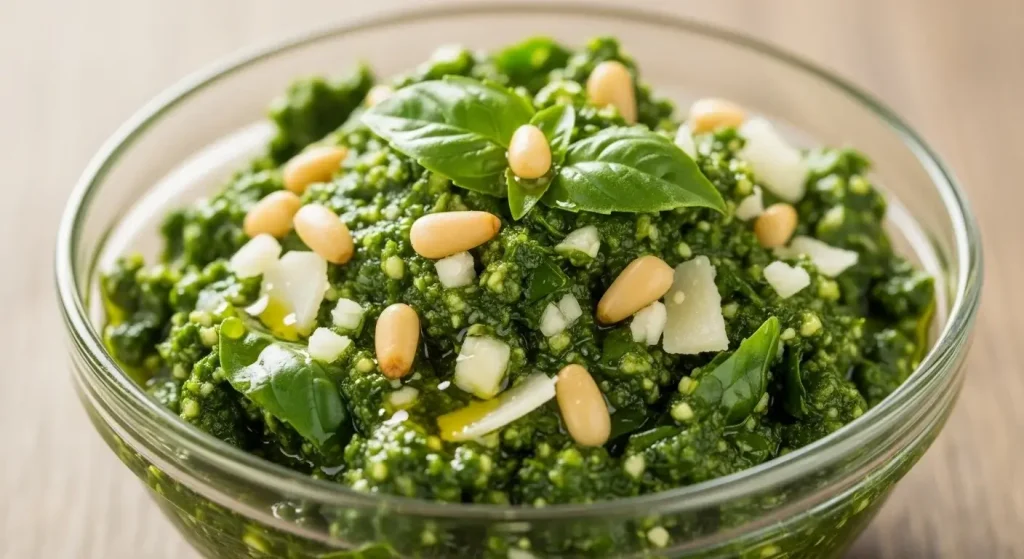
Transfer the pesto to a glass jar. Smooth the top and add a thin layer of olive oil on top to protect it from air. This prevents the pesto from turning brown.
Storage Life:
- Fridge: Up to 7 days
- Freezer: Up to 3 months (use ice cube trays for portioning)
Simple Ways to Customize Your Pesto
One of the best things about pesto is how easily customizable it is. You can adjust the ingredients to match your taste or dietary needs.
Nut Variations
- Walnuts for earthy flavor
- Cashews for creaminess
- Almonds for a mild, sweet taste
- Sunflower seeds for a nut-free version
Cheese Options
- Use Pecorino Romano for a sharper, saltier flavor
- Make it dairy-free by skipping cheese and adding nutritional yeast
Herb Variations
You can replace some basil with:
- Spinach
- Kale
- Parsley
- Cilantro
This helps reduce cost and gives different flavors.
Oil Variations
While olive oil is traditional, you can use avocado oil for a milder taste.
How to Use Homemade Pesto
Pesto is incredibly versatile. Once you make a fresh batch, you can use it in dozens of delicious ways.
1. Pesto Pasta: The most classic use—simply toss warm pasta with fresh pesto for a fragrant, creamy dish.
2. Sandwiches and Wraps: Spread pesto in grilled sandwiches or wraps for extra flavor.
3. Pizza Sauce: Use pesto instead of tomato sauce for a fresh, green pizza.
4. Marinade for Chicken or Fish: Pesto adds a rich herbal flavor to grilled meats.
5. Salad Dressing: Mix pesto with a little lemon juice to make a quick, flavorful dressing.
6. On Vegetables: Drizzle pesto over roasted potatoes, tomatoes, or steamed vegetables.
7. In Soups: Add a spoonful of pesto to vegetable soups for a bright finish.
8. With Eggs: Serve pesto with scrambled eggs, omelets, or egg sandwiches.
Pesto’s uses are endless, which is why it’s worth making fresh at home.
Tips for Perfect Homemade Pesto
- Use fresh basil; avoid wilted leaves.
- Toast the nuts lightly for deeper flavor.
- Add oil slowly to prevent separation.
- Don’t over-blend or the pesto may lose its bright color.
- Store with a thin layer of olive oil on top to prevent browning.
- Add lemon juice for extra freshness.
These small details make a big difference in the final taste.
Conclusion
Homemade basil pesto is more than just a sauce — it is a fresh burst of flavor that can completely transform everyday meals into something vibrant and special. The beauty of pesto lies in its simplicity: a handful of ingredients blend together to create something incredibly aromatic, colorful, and deeply satisfying. When you make it at home, you get full control over the taste, texture, and ingredients, which means healthier choices, richer flavors, and endless customization.
Every spoonful of homemade pesto carries the freshness of basil, the warmth of toasted nuts, the richness of Parmesan, and the smoothness of olive oil. Whether you enjoy it with pasta, spread it on bread, drizzle it on vegetables, or mix it into salads, pesto adds brightness and character to any dish. With the detailed steps in this guide, you’ll be able to make the perfect pesto every time — creamy, flavorful, and beautifully green.
Once you start making pesto at home, bottled pesto will never taste the same again. Fresh, simple, and full of real ingredients — that is the magic of homemade pesto.