In Middle Eastern cuisine, hummus is a famous dish. Try this best Hummus recipe at home. This creamy and rich dip mainly composed from chickpeas and tahini has extended far outside of where it originated with hummus being established as the basic staple food. It is also wholesome and easy to prepare, so that it makes a perfect add-on for snacks or as part of recipes people share together both for work day lunches and serving guests at night at home. Whether served as a dip with fresh vegetables, spread on warm pita bread, or used as a topping for salads and bowls, hummus has the right blend of flavor, texture, and nutrition for everyone to enjoy. It’s versatile, healthy enough that you feel good eating it in large quantities, and very easy to make.
The great thing about hummus is that it’s kept simple. With just a few ordinary ingredients, you can make a luxurious and creamy dip as good as any costly restaurant’s. This guide will walk you through the history of hummus, the best ingredients to use, step-by-step preparation, variations, and hints to ensure perfect results every time.
The History of Hummus
The roots of hummus lie in the Levant region of the Middle East, which today includes Israel, Lebanon, Palestine, Jordan, and Syria. Exactly where it began is open to question but chickpeas– one of its essential ingredients– were grown in the Middle East for thousands of years. References to pastes based on chickpeas go back as far as the 13 century, although today’s hummus probably came into being only at a later time when tahini (sesame paste) and lemon juice were added.
Since it was so simple to make and yet so nutritious and easy to digest, hummus quickly become a staple of Middle Eastern cuisine. Over the years it spread to neighboring areas and was finally taken up by the West. Now it is to be found in restaurants and supermarkets the world over, treasured for its light creamy texture and nutty taste which lends itself uniquely well to combination.
Choosing the Best Ingredients for Best Hummus recipe at Home
The choice of ingredients will greatly affect the final quality of your hummus. Every ingredient contributes to smoothness, flavor, and richness.

Core Ingredients
- Chickpeas (Garbanzo Beans): Use either canned chickpeas for convenience or soak and cook dried chickpeas for a richer flavor.
- Tahini: High-quality sesame paste is essential for a nutty, creamy base.
- Lemon Juice: Freshly squeezed lemon juice adds brightness and balances it with the richness of tahini.
- Garlic: Raw cloves of garlic give only a slight pungent kick that enriches it.
- Olive Oil: Extra-virgin olive oil makes the texture smoother as well as adding a subtly fruity nuance.
- Salt: Balances and brings out the natural flavors in chickpeas.
Optional Ingredients
- Ground cumin or paprika to add an extra flavor dimension
- Water or chickpea cooking liquid to adjust consistency
- Fresh herbs like parsley to garnish
Tip: Hummus made with relatively soft, not mushy cooked chickpeas is creamier and free from grit. For still smoother hummus, take the skins off every chickpea after cooking—this step may seem laborious but achieves wonders.
Equipment You Will Need
Hummus does not require specialized kitchenware, but the right tools can speed and smooth the process.
- Food Processor or Blender: Essential for blending chickpeas and tahini into a smooth paste.
- Measuring Cups and Spoons: For accurate ingredient proportions.
- Mixing Bowls: For combining and adjusting ingredients.
- Spatula or Spoon: For scraping the sides of the food processor to ensure even blending.
- Serving Dish: For display purposes, shallow if possible, to show off garnishments such as olive oil or paprika.
Note: Using a high-powered food processor produces super-smooth hummus. A regular blender makes it slightly more lumpy.
Step-by-Step Hummus Preparation
Step 1: Cook the Chickpeas
Let them stand in cold water for six to eight hours or overnight. Drain and rinse. Of course, you could peel them individually, but who has the time?
Step 2: Blend the Base Ingredients
In a food processor, combine chickpeas, tahini, lemon juice, and garlic. Blend until smooth. The mixture may be somewhat thick in texture now but it will loosen up with further steps.
Step 3: Adjust the Texture
With the machine running, add olive oil and a few tablespoons of water (or chickpea cooking liquid) and blend until the desired creamy consistency is achieved. Give it a final blending to make smooth. Taste to see that the seasoning is correct.
Step 4: Serve and Garnish
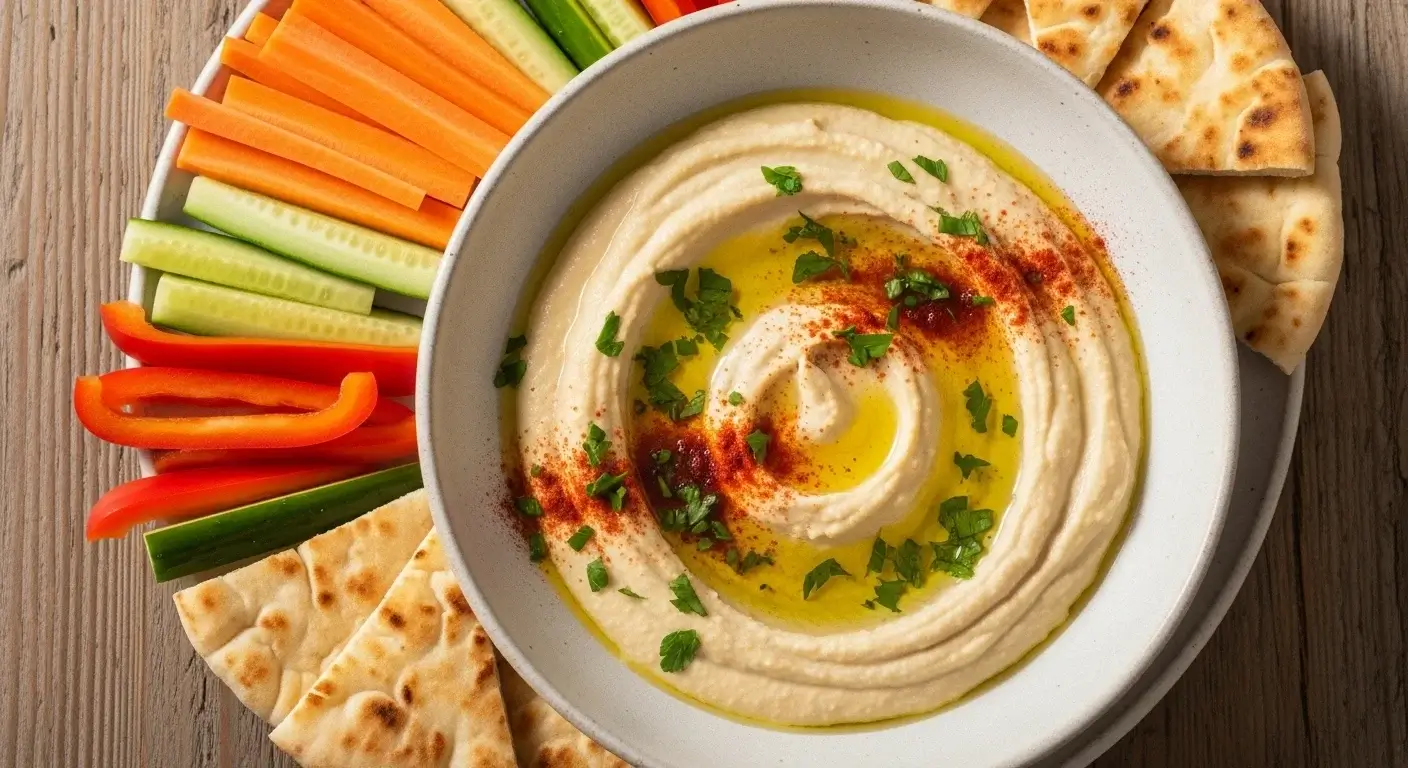
Transfer hummus to a shallow serving dish. Smooth out a little hollow in the centre of the spread with the back of spoon. Pour a good dollop of extra virgin olive oil into hole and sprinkle paprika or some chopped parsley over top, either for taste or colour. Hummus may be served at once, or chilled for a more rounded flavor.

Tips and Hints
- For Pureed Hummus: If you prefer a smoother hummus, peel the chickpeas before blending.
- Spice Tip: Adjust lemon, salt, and garlic to your taste.
- Volume: Gradually add water until you reach a smooth, thick, and scoopable consistency.
- At the Table: Drizzle liberally for richer taste and better presentation.
- Resting: Let flavors mature by chilling hummus in the refrigerator for an hour before serving.
Variations of Hummus
Flavor Variations
- Roasted Red Pepper Hummus: Blend roasted peppers into the base for sweetness and color.
- Beet Hummus: Cook and blend roasted beets for a bright pink dip.
- Spicy Hummus: Add cayenne pepper, smoked paprika, or harissa.
- Avocado Hummus: Blend in ripe avocado for an unexpectedly smooth, green variation.
Dietary Variations
- Vegan: Traditional hummus is naturally vegan, but ensure no added dairy.
- Gluten-Free: Naturally gluten-free, perfect for gluten-intolerant diets.
- Low-Fat: Reduce olive oil slightly or replace part with water for lighter hummus.
Storage and Make-Ahead Tips
- Refrigerator: Store in a sealed container for up to five days. Drizzle extra olive oil on top to preserve freshness.
- Freezer: Freeze hummus for up to three months. Thaw in the refrigerator and stir before serving.
- Ahead of Time: Can be prepared a day ahead to allow flavors to blend further.
Serving Suggestions
- Traditional: Serve with warm pita bread or chips.
- Vegetable Platter: Serve with sliced cucumbers, carrots, bell peppers, and cherry tomatoes.
- Salad Topper: Add a scoop to grain bowls, salads, or roasted vegetables.
- Sandwich Spread: Replace mayonnaise or butter with hummus for creamy sandwiches.
Presentation Tip: Drizzle olive oil, sprinkle paprika or sesame seeds, and garnish with fresh herbs for a beautiful serving.
Nutrition Information (Per Serving, 1/4 Cup)
| Nutrient | Amount |
|---|---|
| Calories | 100 kcal |
| Protein | 4 g |
| Carbohydrates | 9 g |
| Sugars | 1 g |
| Fat | 6 g |
| Saturated Fat | 1 g |
| Sodium | 150 mg |
| Fiber | 3 g |
Hummus is nutrient-dense, providing plant-based protein, healthy fats, and fiber, making it an excellent choice for snacks, appetizers, or meals.
Conclusion
Hummus is more than just a condiment. It embodies the essence of Middle Eastern cuisine, refreshes people, and promotes healthy eating. With simple ingredients, basic equipment, and a few techniques, you can create perfect, smooth, savory hummus at home. Its versatility allows endless variations and occasions.
Homemade hummus, whether served with bread, vegetables, salads, or part of a spread, is always a hit. Take the time to perfect the flavors, experiment with variations, and enjoy the creamy, nutty taste that has been loved worldwide for centuries.